Inklaim Features
Features
Inklaim is web software from an Italian start-up founded in Turin that prepares draft patent drawings, checked against EPO, UIBM, USPTO, PCT, CNIPA and KIPO rules, from 3D CAD models (STEP/IGES), DXF or vector PDF files, photos of an object, sketches and claims.
Inklaim covers the whole workflow for the drawings of a patent application: you upload the 3D model, the technical drawing, the sketch or the claims; you get the figures, lay them out on sheets, check them and export them for the office and language you need.
The geometry always comes from your files. AI is optional: it works on texts and proposes numerals and checks for you to confirm, never geometry.
The five areas
Each area has its own in-depth page, with screenshots of the app.
You will find them below, on this page.
Methods and systems
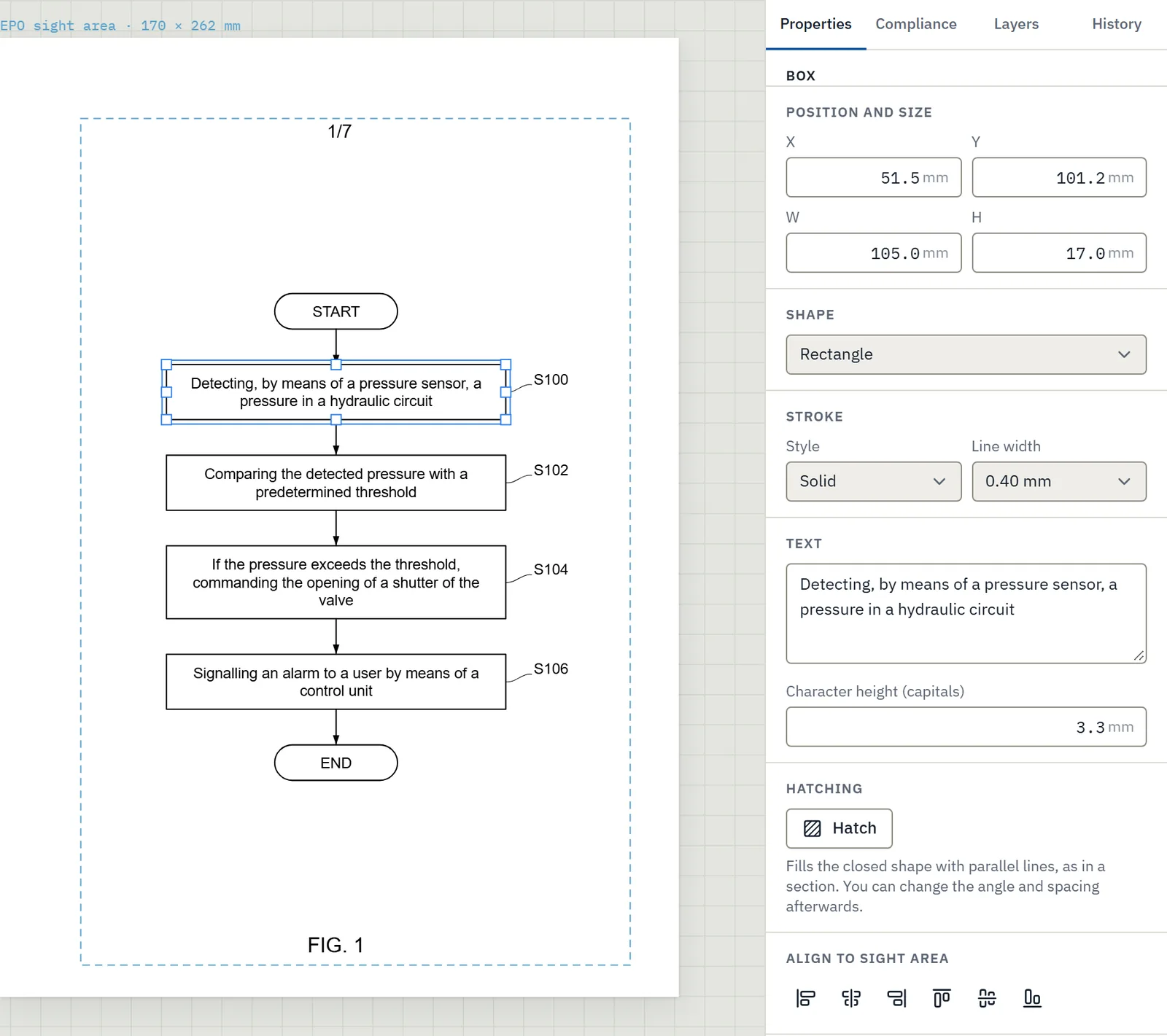
From method claims, Inklaim derives the flowchart with the steps already numbered: S100, S102 and so on. From system claims, it derives the block diagram. It works without AI too, straight from the text, and the diagram can then be edited like any other figure.
For the EPO, flowcharts and diagrams are drawings in every respect (Art. 1(3) of the Decision of the President of the EPO dated 7 July 2025, OJ EPO 2025, A49): the minimum character height of 0.32 cm applies, and the reference signs must be consistent with the description.
Updated October 2026
From a sketch
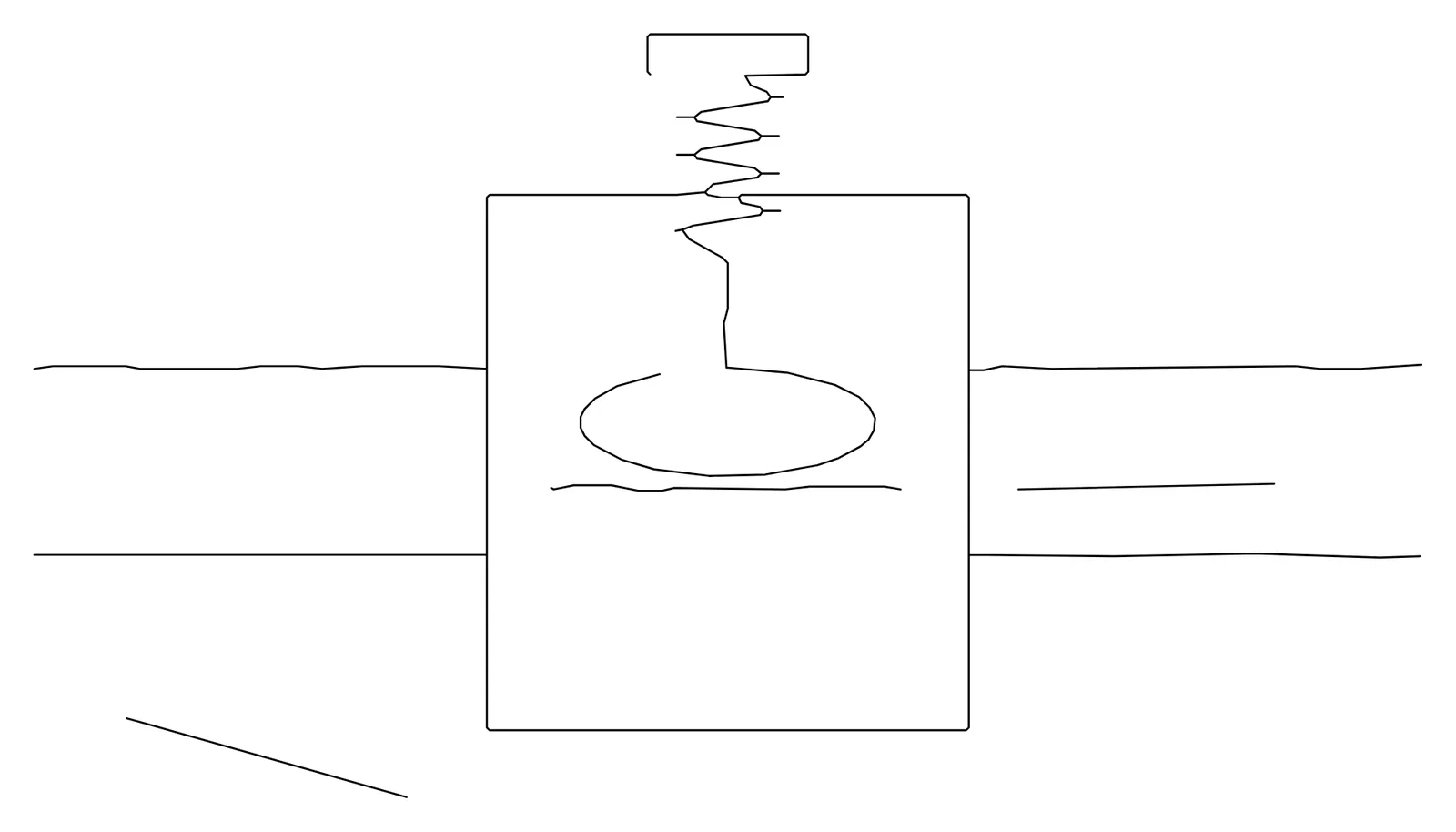
Upload a sketch and Inklaim turns it into a line drawing (beta feature). The lines follow the sketch: none is invented.


On the traced paths you work with the eraser and scissors, “Split strokes”, “Join” and the “Simplify” slider. If AI is on, it can propose the reference numerals for figures from a sketch: you confirm them.
From photos of an object (beta)
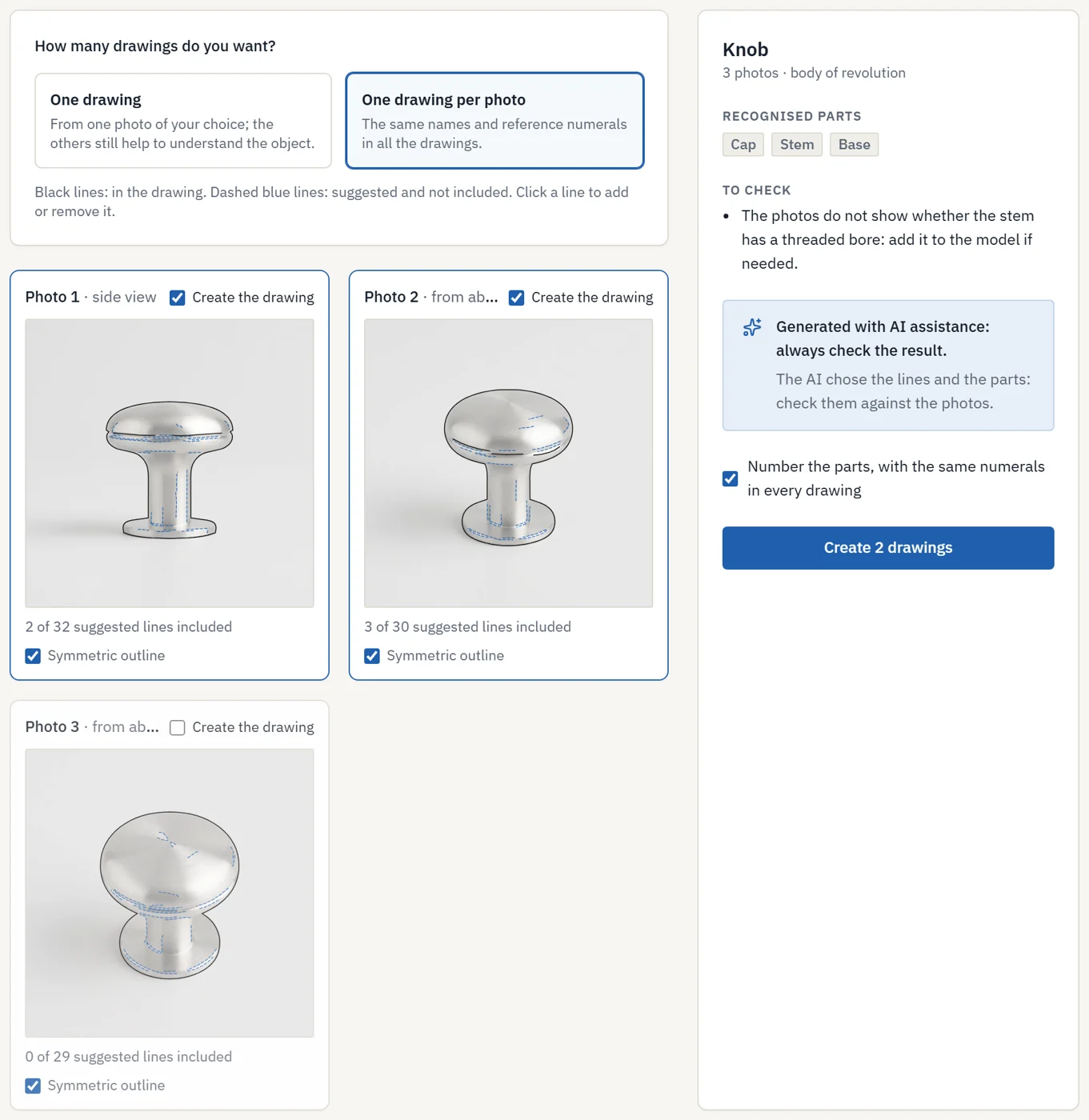
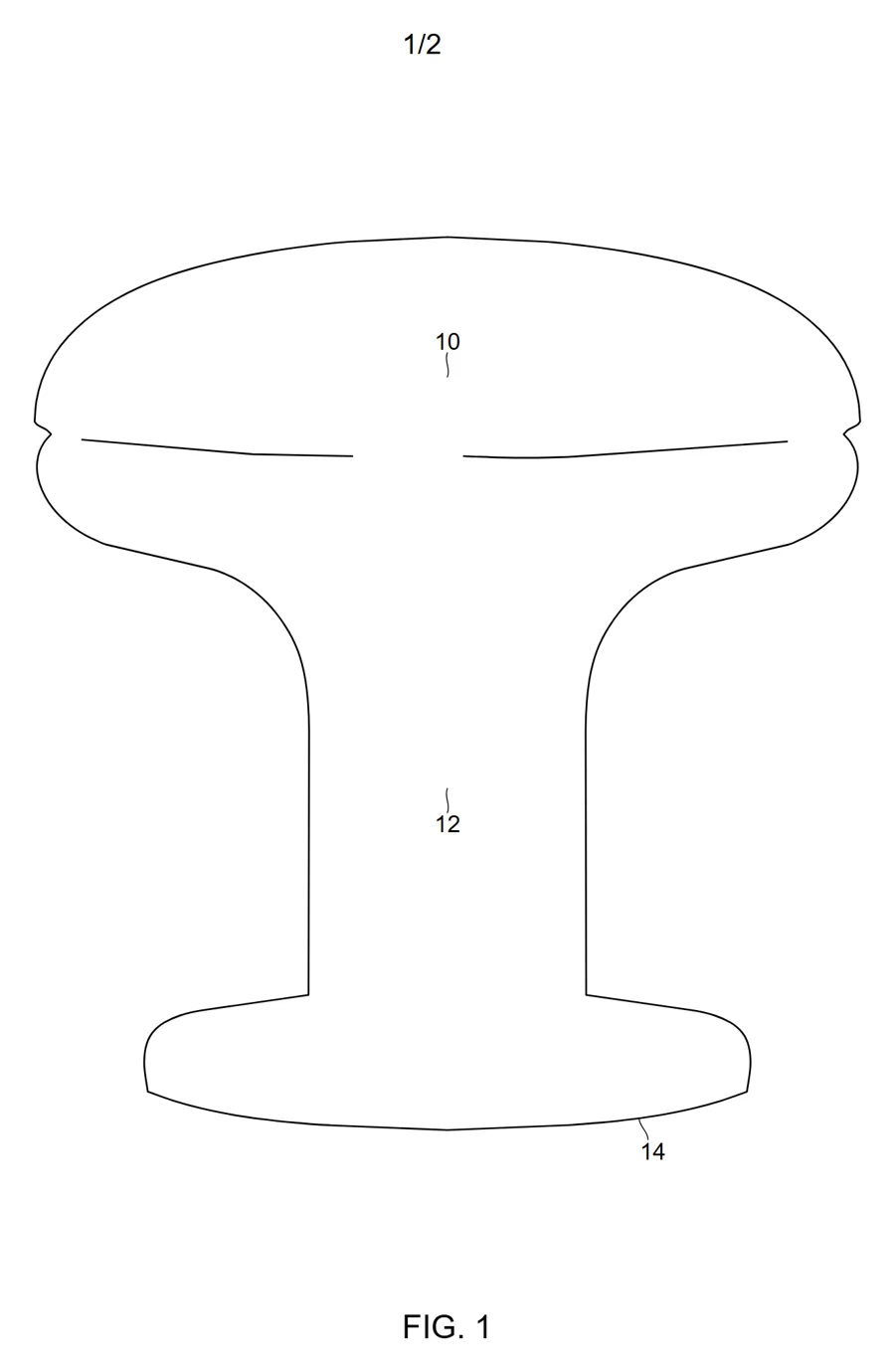
From 1 to 8 photos of the same object (PNG, JPG or WebP), even of shiny metal: Inklaim separates the object from the background with a clean outline and proposes the inner lines. The lines always come from the photos: none is invented.


The AI only chooses among the lines proposed from the photos. The model’s measurements come from the outlines in the photos: the AI only says what the object is like. The inside (bores, undercuts) cannot be seen in photos and is entered by hand. The images show a sample photo and a sample AI reading.
The editor

Text and export
Upload the Word file with the claims and description: Inklaim recognizes the sections and shows them in a preview before importing them into the matter.
PDF ready for filing, SVG, layered DXF to continue in AutoCAD, and a ZIP of the whole matter. You choose the language of the texts at export: the drawing stays one, and the numerals do not change.
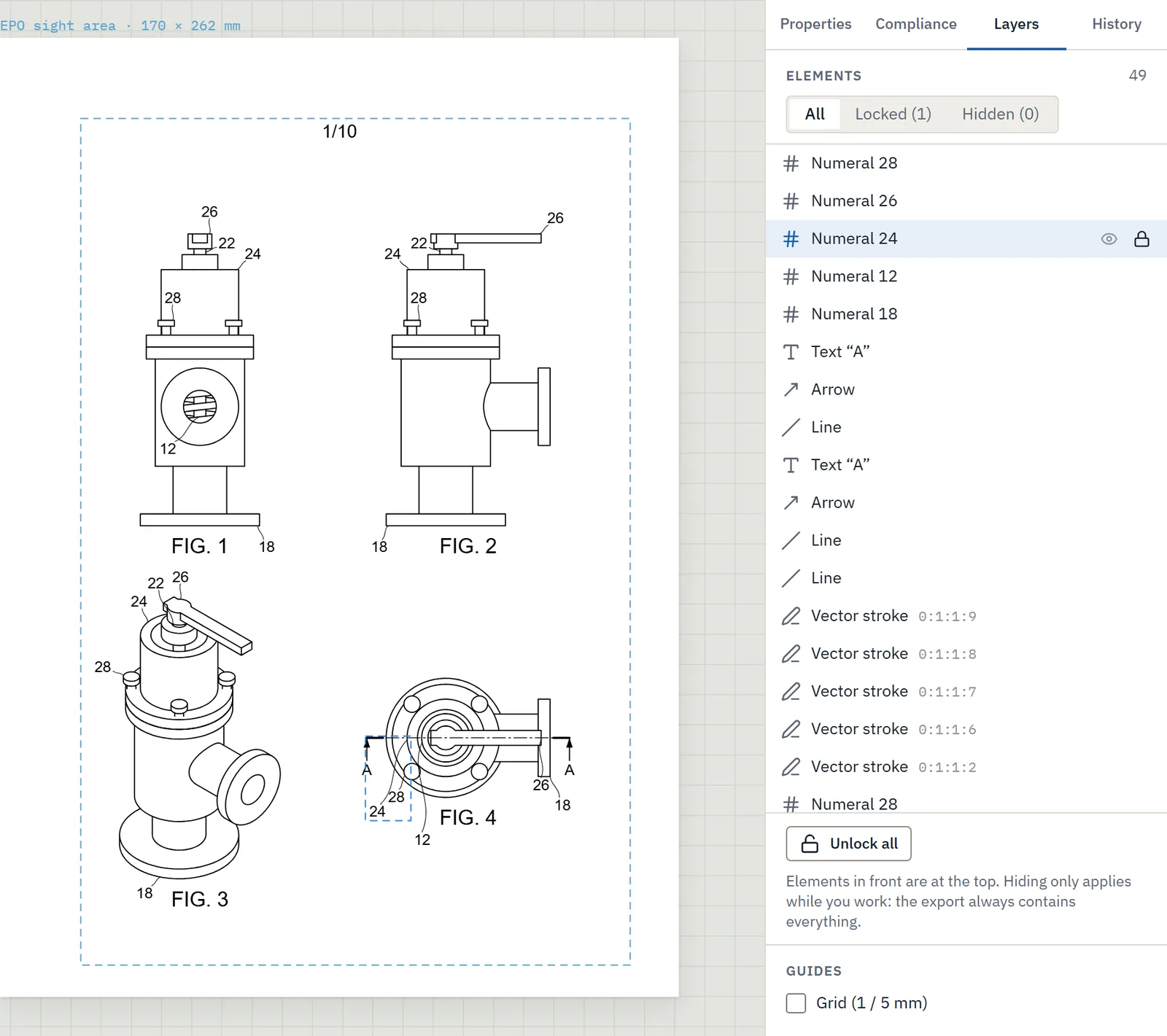
EPO, UIBM, USPTO, PCT, CNIPA (China) and KIPO (Korea): each with its own usable area, minimum character height, labels (FIG. 1, 图1, 도 1) and sheet numbers. The UIBM, for example, requires margins of at least 2.5 cm on all sides; for China and Korea there are also the images for online filing, one per view, in black and white at 300 dpi.
Administrator, patent attorney, draftsperson and reviewer. The reviewer views and approves without editing.
Inklaim runs in the browser, in Chrome or Edge. Data is stored in the European Union on all plans: the details are on the security and data page.
FAQ
Not native files: export the model to STEP or IGES and upload it. Inklaim is tested on real files exported from SolidWorks, Inventor and Siemens NX, including assemblies and models in inches. DWG files must be saved as DXF.
Yes. Export the sheet as a layered DXF and open it in AutoCAD. For filing, you can export the PDF for the chosen office directly.
Yes. CAD views, 2D import, flowcharts, checks and numbering work with AI switched off. AI adds glossary-based translation and proposed numerals for you to confirm.
EPO, UIBM, USPTO, PCT, CNIPA (China) and KIPO (Korea). For each one, Inklaim applies the usable area, character height, labels and sheet numbers; for CNIPA and KIPO it also prepares the images for online filing. The JPO is not built in yet. The sheets remain drafts: the final check is the patent attorney’s.
The pilot
A 4-week pilot with 3–6 people, on matters already filed and published, after a non-disclosure agreement. Together we compare time and quality.